
FROM SCREEN TO HAND
WHAT A LINEN SAMPLE REVEALS BEYOND THE SPECIFICATION
How hand, drape, light, color and scale shape the final reading of linen.
A technical specification identifies a linen’s composition, weight, width, construction and finish.
These facts are essential, but they do not describe the complete experience of the material.
A physical sample reveals how the fabric feels, bends, reflects light, carries color and responds in motion. The specification describes individual qualities. The sample shows how they work together.
HAND IS MORE THAN SOFTNESS
In textile language, hand describes the combined sensory impression produced when a fabric is touched and handled.
Linen may feel dry or smooth, crisp or relaxed, compact or airy. These differences are shaped by the yarn, weave, fabric density and finishing processes.
This is why two fabrics described as 100% linen can feel entirely different.
Composition identifies the fibre. Hand reveals the material character created from it.
WEIGHT DOES NOT DETERMINE DRAPE ALONE
Weight provides useful physical context, but it cannot predict movement by itself.
Two linens with a similar weight may fold, fall and respond differently. Yarn size, weave structure, density and finish also influence whether a fabric feels fluid, structured, relaxed or controlled.
A lighter linen is not automatically more fluid, and a heavier linen is not necessarily more rigid.
The distinction becomes visible when the material is lifted, released and allowed to move.

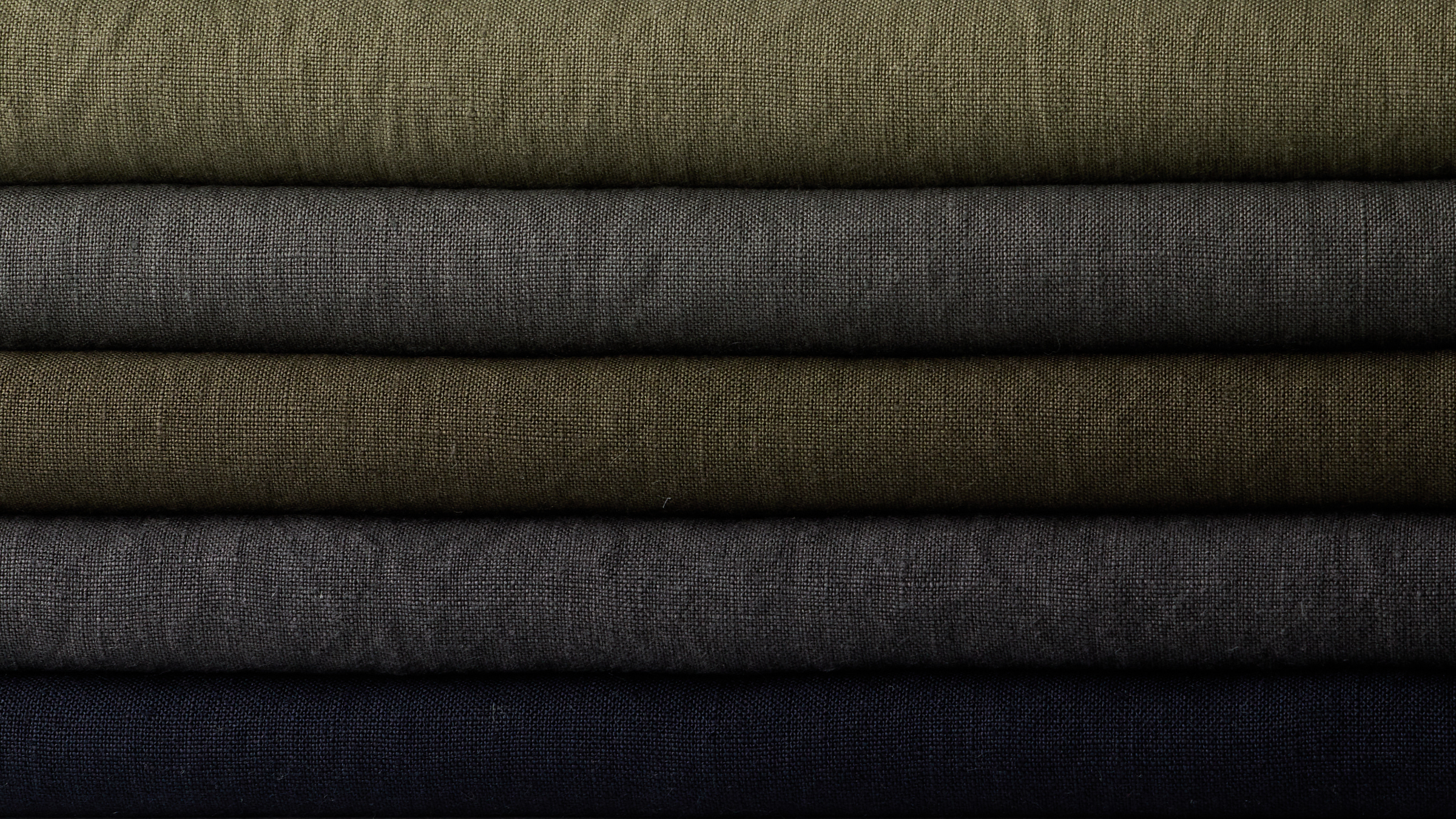
Light does more than illuminate linen. It reveals its structure.
Front lighting emphasizes color and surface. Side lighting brings out the dimensional character of the weave. Backlighting exposes openness, density and transparency that may remain hidden when the fabric lies flat.
Color also changes with its surroundings. Texture creates small areas of light and shadow, while different light sources can make the same linen appear warmer, cooler, lighter or more muted.
Two materials that match under one light may separate under another—a phenomenon known as metamerism.
For this reason, color belongs not only to the fabric, but also to the environment in which it will be used.
SCALE CHANGES THE READING
A small sample provides valuable information about color, weave and hand, but it cannot reveal everything that happens across a larger surface.
In a curtain, repeated folds create rhythm, shadow and visual weight. On an upholstered panel, texture becomes part of an architectural plane. In a garment, the material responds to cut, construction and movement around the body.
A prominent texture may become subtle at scale. A structured swatch may relax when allowed to fall through a greater length.
The sample introduces the material.
Scale reveals its presence.
READING THE MATERIAL AS A WHOLE
No single quality determines whether a linen is right for a project.
A beautiful hand does not replace technical performance information. An appropriate weight does not guarantee the desired drape. An accurate color reference does not show how the material will react under its final lighting conditions.
A specification and a physical sample answer different questions.
The specification establishes what can be measured. The sample reveals how the fabric feels, moves and responds within its surroundings.
Together, they create a more complete understanding of linen—one that respects both technical clarity and material experience.
The specification begins the reading.
The material completes it.
Material knowledge. Clearer decisions.


